
Valdosta Previous Resident Sources
A backward address trail has two parts. Property records identify owners and transfers. Household sources identify people linked to the address at a dated point. The strongest result pairs both, while keeping each source's limits clear.
| Source | Years covered | Where held | What it shows |
|---|---|---|---|
| qPublic and tax digest | Current; owner refresh about monthly | Lowndes Assessors | Situs, owner, parcel, legal description, deed reference |
| GSCCCA deeds | At least 1999 to present | Web or courthouse | Grantor, grantee, transfer, legal description |
| Earlier deed books | Exact local start varies | Clerk, Archives microfilm | Pre-digital ownership chain |
| City directory evidence | 1904 and 1931 verified | Historical sources and local collections | Dated occupant and address |
| Telephone pages | December 1943 to January 1953 | DLG and Library of Congress | Name, telephone, address |
| Federal census | Public through 1950 | NARA and library databases | Household at a census address |
| Sanborn maps | 1885, 1911, 1912, 1922 | DLG and Library of Congress | Building, use, block and house numbering |
| Valdosta Daily Times | Searchable from 1875 in branches | SGRL subscription | Obituaries, transfers, notices, address events |
Start with qPublic for a recent property. For an early twentieth-century home, maps and directories may be more useful at first. A deceased owner's trail may turn toward probate and newspaper notices.
Start Valdosta Address History Today
Search the physical address in Lowndes qPublic. Copy the parcel ID, normalized situs, indexed owner, mailing address, legal description, sale entry, and deed book and page. Situs means the parcel's physical location. The mailing address is where tax correspondence goes. A difference between them can reflect an estate, trust, business, manager, nonresident owner, or simple preference.
The deed reference is the fastest bridge into the name-based recorded-document system. qPublic ownership updates about monthly, so a newly recorded transfer can appear first with the clerk. That lag is a local quirk, not proof that either record is false.
Best first move. Preserve the parcel number and legal description before following names because those property identifiers survive many address changes.
Trace Lowndes Past Owners Backward
The Lowndes County Clerk of Superior Court's Real Estate Division keeps deeds, plats, liens, trade names, UCC filings, and related material at 327 N. Ashley Street, first floor, phone 229-333-5125. The GSCCCA search hub supplies statewide web access. Every Georgia county reaches at least January 1, 1999 online; the exact earlier Lowndes cutoff is not published.
- Use qPublic to copy today's owner, parcel, legal description, and acquisition book and page.
- Open that instrument through GSCCCA or at the courthouse. Record the buyer, seller, date, and property description.
- Search the seller as a prior grantee, meaning a buyer, with an end date near the later sale.
- Confirm the candidate by subdivision, lot, land lot, acreage, metes-and-bounds description, and cross-reference.
- Repeat until the online trail ends, then use direct and reverse indexes, deed books, plats, or microfilm.
Do not rely on the street number alone. A deed may describe boundaries by courses and distances, a method called metes and bounds, without using a modern mailing address.
- Grantor
- The person or entity transferring an interest.
- Grantee
- The person or entity receiving that interest.
- Chain of title
- The linked sequence of recorded transfers for one property.
- Legal description
- The formal land wording that identifies the estate more reliably than a street label.
Valdosta Deed Index Access
The online index helps find a document reference, but an index entry is not the recorded image or a certified copy. Images and premium functions can require an account or fee. The courthouse remains the fallback for older books, direct and reverse indexes, plats, and certified records.
The GSCCCA historical-record search entry is the source for this captured screen.
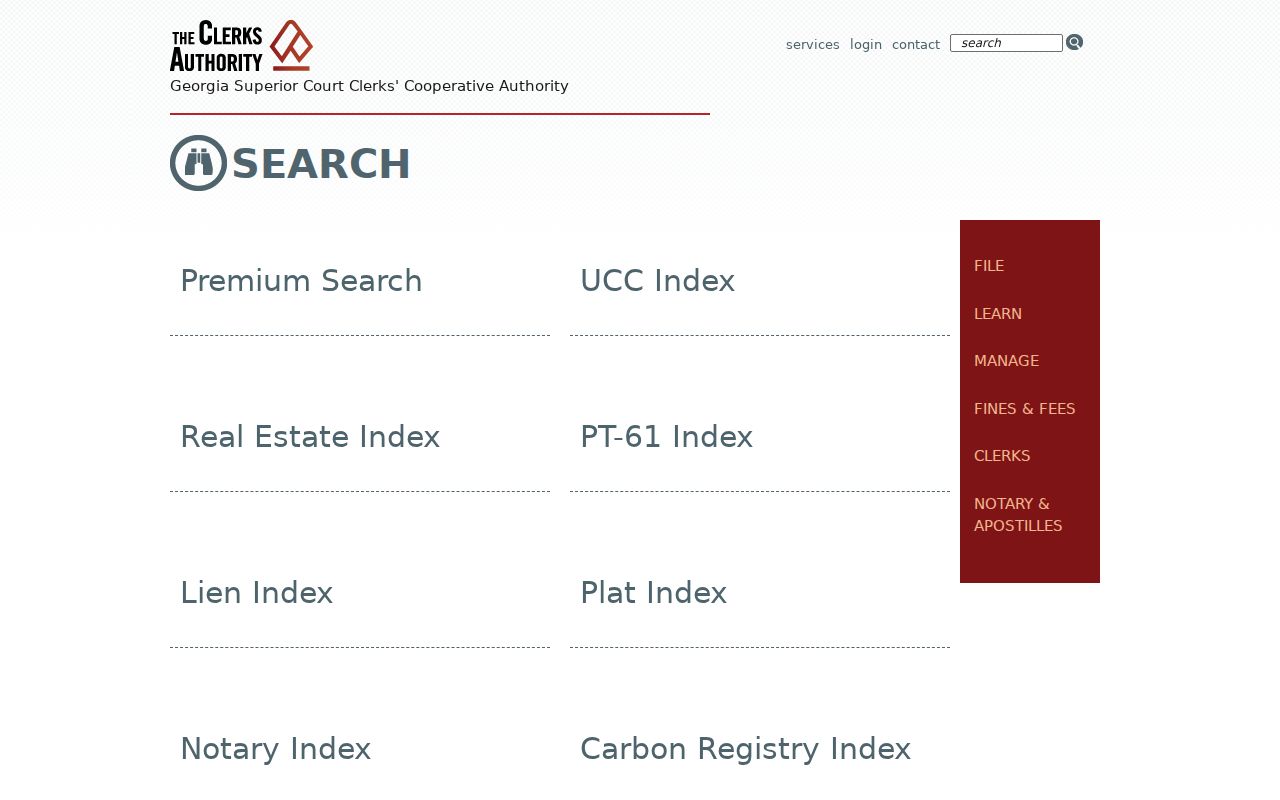
The image shows the statewide route into recorded material. It does not establish that every early Lowndes deed image is free or online. Call the Real Estate Division when a book, page, or date falls outside the visible web coverage.
Separate Valdosta Occupants From Owners
A deed proves a recorded property interest, not everyone who lived there. A directory or telephone book may name an occupant who rented. Conversely, an owner can live elsewhere. Compare sources by date and state exactly what each says.
Verified Valdosta city-directory evidence exists for 1904 and 1931, while digitized white and yellow telephone pages span December 1943 through January 1953. No authoritative online shelf list proves a continuous annual run or verified local criss-cross collection. The Valdosta city directory collections explain the surviving volumes in depth.
Search surname and initial variants, read the abbreviation key when present, and record the printed address exactly. Telephone books omit non-subscribers and household members. Directory entries are snapshots rather than complete resident rolls.
A Valdosta Directory Address Quirk
A 1931 archival timeline places W. R. and Rosa Strickland at 1006 N. Patterson in a Valdosta city directory. A letter dated that same year went to Rosa at 103 Brookwood Drive. Both records can be genuine while describing different moments, mailing choices, or household ties.
This local example is a useful warning for previous-resident work. Never discard one result just because a second source gives another address. Date both, check who created each record, and seek an independent bridge such as a deed, census page, newspaper notice, or map. Past residents often moved between publication and delivery dates, and compiled books could lag real life.
Note: A dated directory entry supports association with an address, but it does not prove year-round presence or ownership.
Map Valdosta Previous Addresses
Sanborn fire-insurance maps preserve house and block numbers, building footprints, construction, openings, water features, property lines, and building use. Valdosta coverage is verified for 1885, 1911, 1912, and January 1922. The first map is one sheet at a scale of 1:600. The 1922 set has 26 sheets, a vivid measure of city growth.
Open the digitized 1885 Valdosta map or the 1922 Library of Congress set. Match intersections, block numbers, footprints, and use before assuming an old house number equals the present situs. No official citywide street-renumbering year was found.
Maps cannot name all previous residents. They solve the address-continuity problem so directories, census pages, and deeds can be compared against the same physical place.
Pair Valdosta Directories and Census
Federal census schedules are public through 1950 under the 72-year rule. They can show a household at a census address, but enumeration order, old street forms, and the national loss of most 1890 schedules create gaps. The local workflow uses dated sources together.
- Record the exact printed directory or telephone-book address and year.
- Find the closest open census year and inspect nearby households as well as the target surname.
- Use a Sanborn sheet to match the block and building when numbering differs.
- Search the Valdosta Daily Times for the name, address, transfer, obituary, marriage notice, or legal advertisement.
- Confirm ownership separately in deeds and tax material.
The South Georgia Regional Library resources include in-branch access to a searchable Valdosta Daily Times archive from 1875 and Ancestry Library Edition. Willis L. Miller Library can be reached at 229-333-0086, but its current opening status should be checked before a visit.
Lowndes Records Before Online Indexes
The Georgia Archives county microfilm cards are the authoritative place to check Lowndes holdings, early ranges, and any recorded disaster or gap. They generally emphasize pre-1900 material. No verified Lowndes courthouse fire or blanket destruction date was found, so a missing online result should never be described as a fire loss without card evidence.
The Georgia county-record microfilm selector provides that fallback.
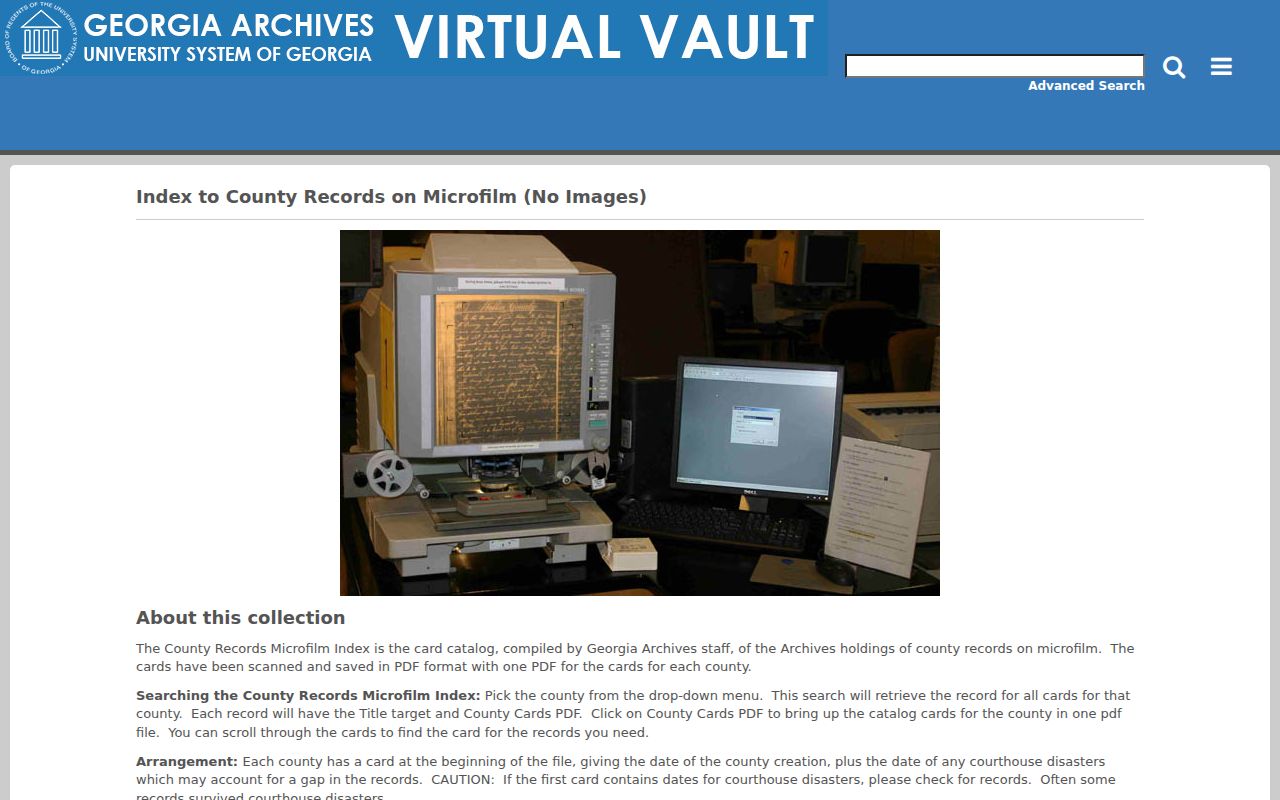
The captured selector leads researchers toward the county PDF and its survival notes. Earlier tax digests, deed books, and probate material may then require microfilm, a courthouse request, or a separate digitized collection.
The Georgia Archives General Name File offers another name route.
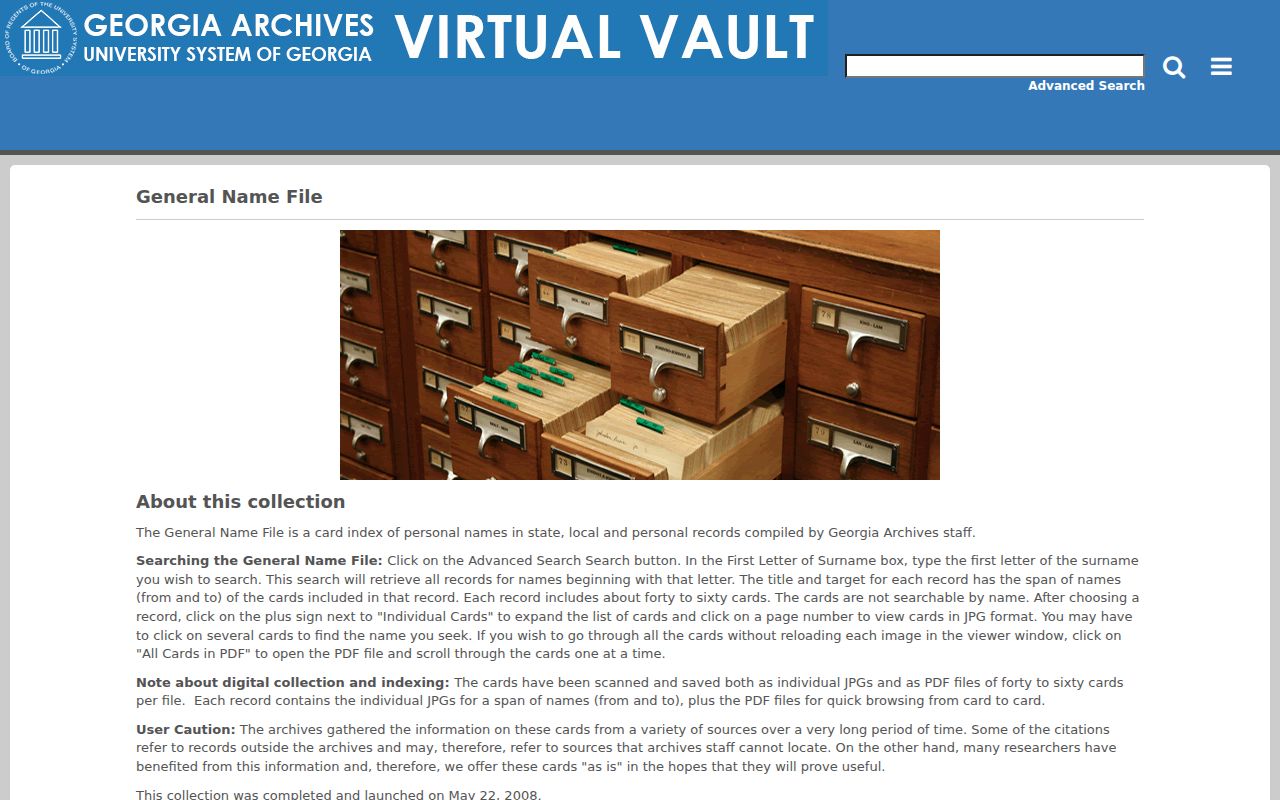
That index is browsed through surname-initial groups of roughly 40 to 60 cards rather than exact-name OCR. Try spelling variants and inspect the surrounding card group.
Follow Valdosta Residents Into Probate
When a deed owner dies, probate can connect the name to a personal representative, heirs, and estate property. Lowndes Probate Court accepts an estate or name examination request. The research fee is $10 per estate or name, with added copy charges possible. Current court contact is 229-671-2650.
Georgia probate records also have a digitized historical route. The Georgia probate collection is shown in the successful project capture.
The collection provides a starting point, while the Lowndes court remains the custodian for current estate requests and copies. Search a decedent's name, death details, likely case period, and variants.
The Georgia Archives vital-record guide clarifies the division between state, county, and archival sources.
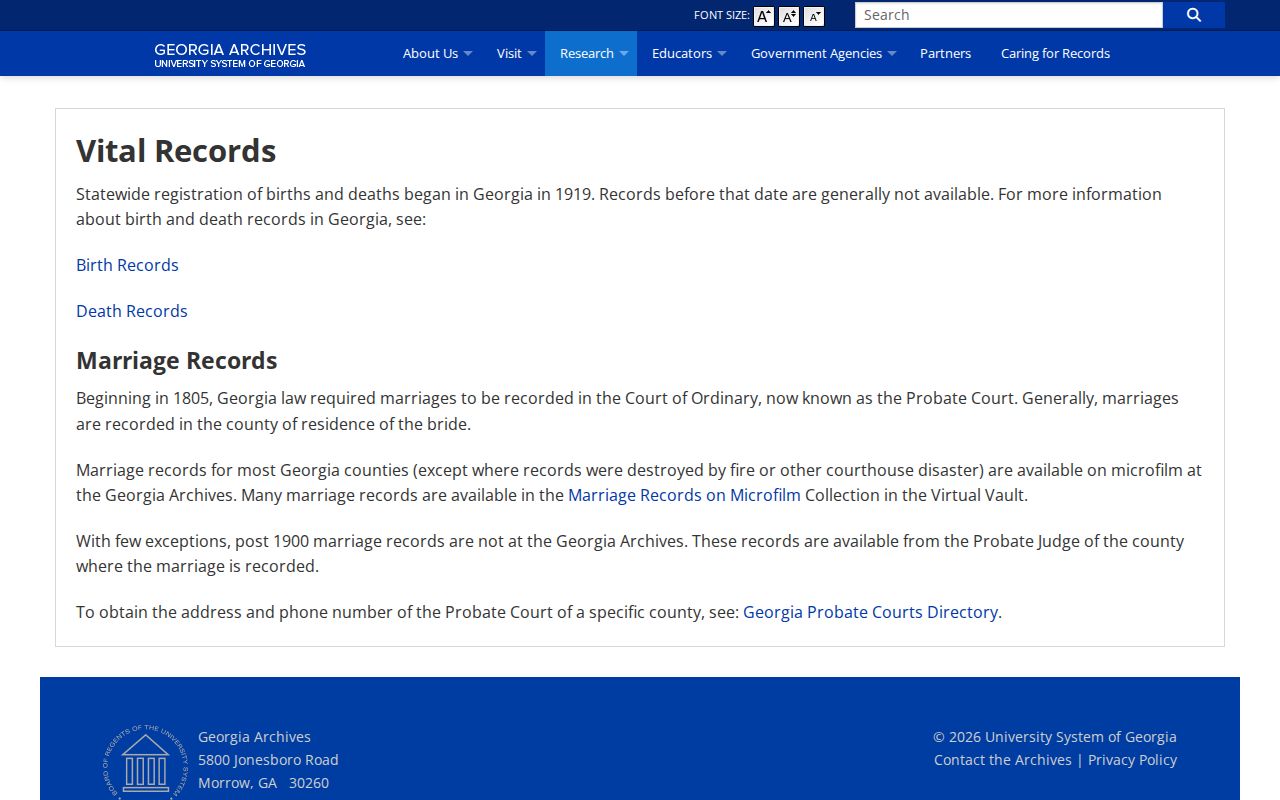
This guide helps route marriage and death evidence without treating an index as the underlying certificate.
Use Valdosta Previous Residents Records Lawfully
Research into previous residents is well suited to house history, genealogy, estate work, and tracing a family address. It is not a license to track, threaten, or harass a living person. Protected addresses may also be withheld through Georgia Safe at Home or a qualifying nondisclosure rule.
Lawful use. Keep Valdosta previous residents research focused on property and family history, and never use an address trail to harm another person.
Expect uncertainty. The assessor can lag a deed, a directory can lag a move, a map can show a structure but no household, and an obituary can repeat family-supplied details. Preserve citations and dates, distinguish owners from occupants, and confirm crucial facts with the custodian. A careful chain describes what each record proves instead of forcing every name into one neat story.